Yield Control Friction: Treasury’s buyback offensive hits a Wall Street wall.
Soaring interest rates, 50% insurance spikes, and rent control caps are freezing out individual housing investors while politicians claim to solve affordability.

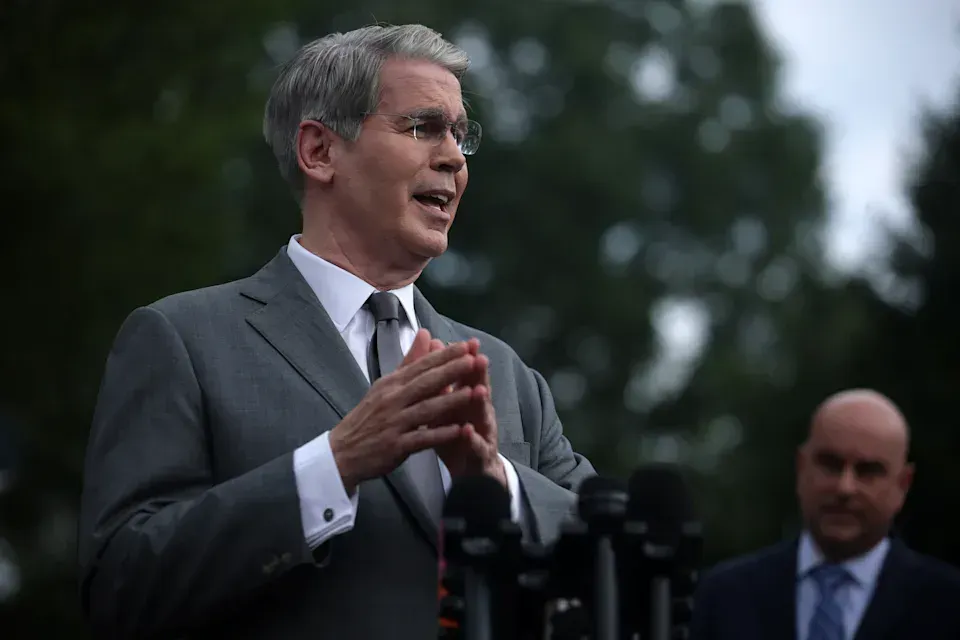
One day after doubling Treasury buybacks, Scott Bessent signals a willingness to go even larger — but long-term yields refuse to back down. Here is the field breakdown.
When the U.S. Treasury attempts to forcefully push down long-term borrowing costs and the bond market responds by driving yields higher, you are watching real-time friction between policy ambitions and market math.
On Wednesday, U.S. Treasury Secretary Scott Bessent surprised Wall Street by announcing plans to at least double scheduled buybacks of 10-year, 20-year, and 30-year Treasury bonds—bumping operations from $2 billion up to at least $4 billion per issue. Just 24 hours later, speaking live onCNBCon Thursday, Bessent doubled down, signaling the program "could be more than $4 billion per issue" as the department seeks to active-manage liquidity in long-dated sovereign debt.
Despite the intervention, the 30-year Treasury yield—which hit a multi-decade high of 5.25% earlier in the week—rebounded right back up, largely wiping out the initial price rally triggered by the buyback expansion.
Here is why Washington's latest buyback maneuver is struggling to pin down long-term rates.
The Buyback Blueprint vs. Market Supply
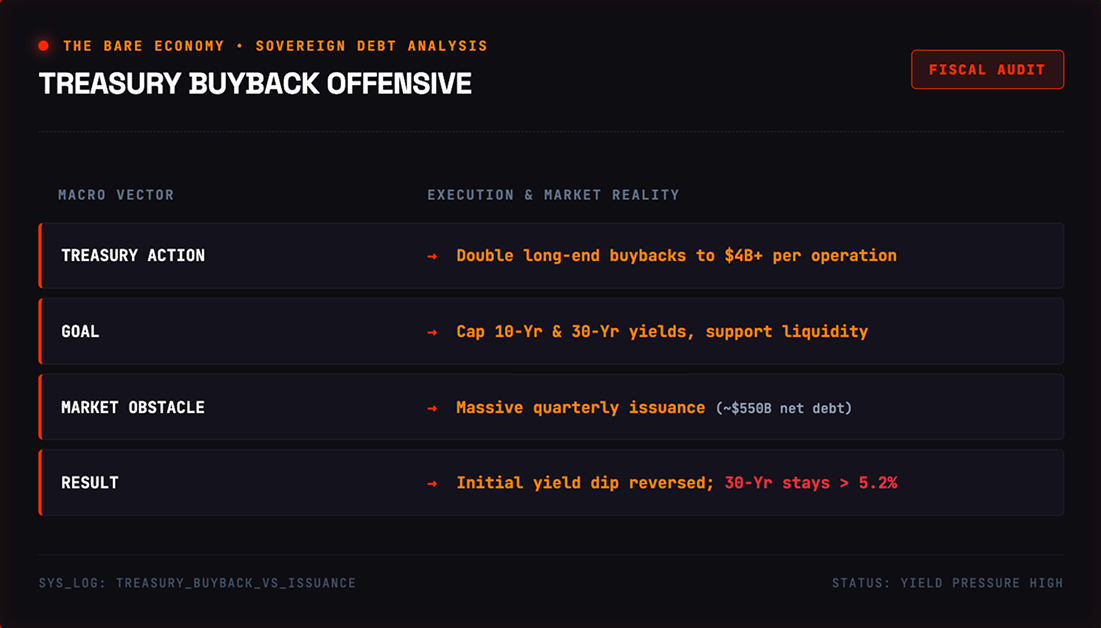
The underlying theory behind Treasury buybacks is straightforward: by repurchasing older, less liquid long-term bonds, the Treasury reduces market supply, boosts bond prices, and pushes benchmark yields down.
However, analysts at firms like TwentyFour Asset Management noted that the buybacks act like a "sticking plaster". While buying back $4 billion per operation sounds massive, it is dwarfed by the sheer volume of new debt the U.S. government must issue to fund federal operations.
The structural pressure keeping yields elevated comes down to three macro realities:
- Record Federal Debt & Deficits: With national debt crossing $40 trillion and the annual federal deficit running above $2 trillion, the supply of new government paper flooding the market easily absorbs the Treasury's buyback capacity.
- Private-Sector Competition for Capital: Large technology firms are floating massive corporate bond issues to finance artificial intelligence data centers, giving institutional investors attractive, high-yielding alternatives to government debt.
- Persistent Inflation & Fed Policy: With crude oil prices elevated and inflation hovering above the Federal Reserve's target, bond investors are demanding a higher "term premium" to lend money to the government over 30 years.
The Macro Extraction: Why Yields Drive Main Street
Why does this high-finance tussle matter to operators on the road?
The 10-year and 30-year Treasury yields form the benchmark interest rate for the entire global economy. When long-term Treasury yields remain sticky above 4.7% and 5.2%, mortgage rates stay elevated, corporate borrowing costs rise, and commercial equipment financing remains expensive.
Bessent argued that long-term yields "don't reflect the underlying fundamentals," pointing to incoming revenue from broad tariffs and administrative spending cuts as eventual deficit-reducers. But bond traders are refusing to price in future spending cuts until they show up in black-and-white treasury accounting.
The Roadside Execution
If you are managing capital, financing equipment, or tracking interest rate risk:
- Do Not Expect Immediate Rate Relief: Department buybacks can smooth volatility, but they cannot override structural debt supply. Plan for high borrowing costs to linger through the fall.
- Watch Federal Reserve Signals: Pay close attention to how incoming Federal Reserve leadership coordinates or clashes with Treasury policy.
- Lock In Fixed-Rate Capital: If you need to roll over commercial debt or finance real assets, assume the floor on long-term yields remains firm until fiscal deficits shrink.
Keep your capital lean, watch your borrowing costs, and stay sharp out there.
— Brook
The Bare Economy. From the road. For the road.