BREAKING: "Operation Economic Outcast" and the $100 Barrel Shadow.
Soaring interest rates, 50% insurance spikes, and rent control caps are freezing out individual housing investors while politicians claim to solve affordability.

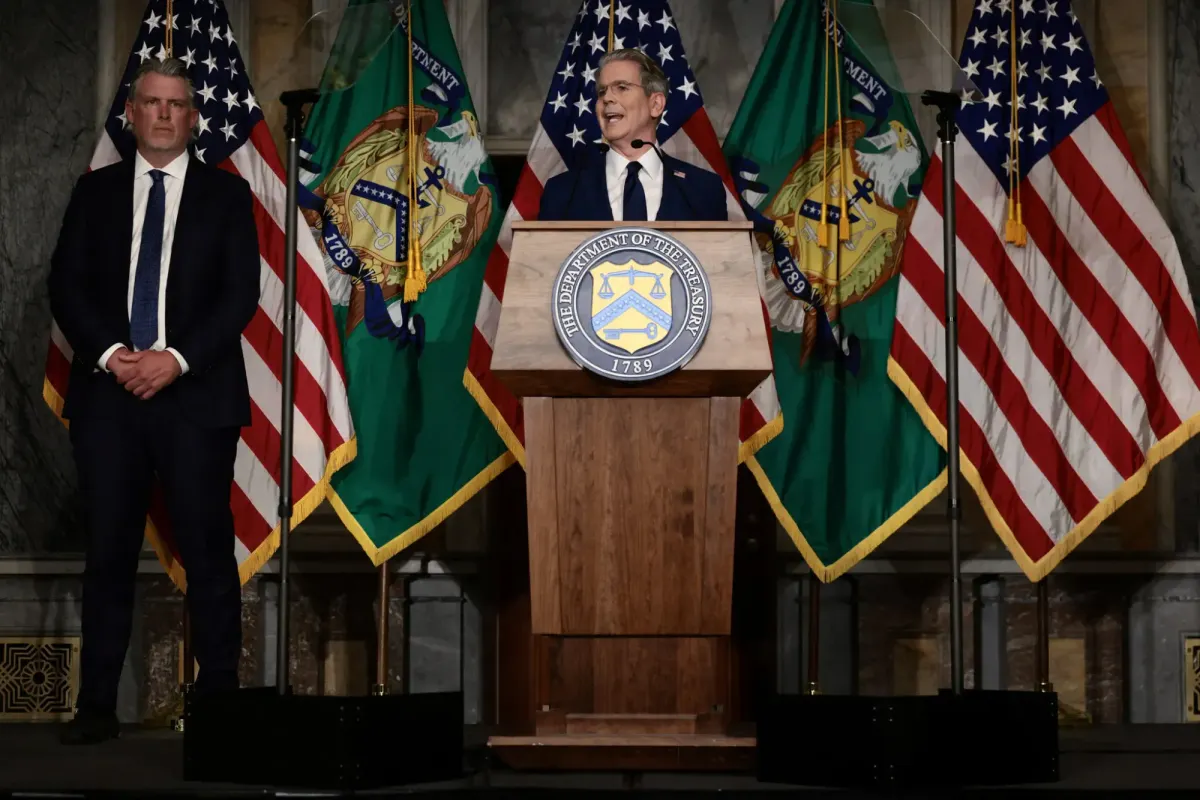
Treasury Secretary Scott Bessent drops "Economic D-Day" sanctions against Iran. Here is how Washington’s geopolitical hammer hits your wallet.
The Treasury Department just dropped the hammer.
Treasury Secretary Scott Bessent formally unveiled what the White House is calling "Operation Economic Outcast"—an aggressive, global sanctions blitz aimed at severing every financial line supporting Tehran.
Writing in the Financial Times and addressing reporters in D.C., Bessent explicitly framed the rollout as an "Economic D-Day," calling it "the single greatest financial offensive ever marshaled against an adversary".
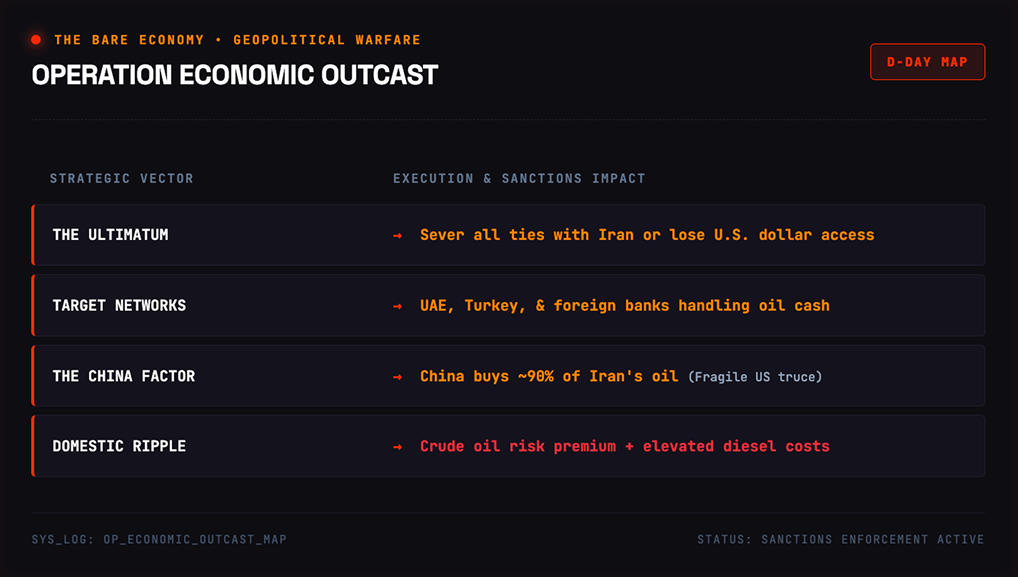
The target isn't just Iran. The U.S. is giving third-party nations, foreign banks, and trade hubs a strict ultimatum: cut off all Iranian energy and financial deals, or get locked out of the U.S. dollar system entirely.
Brook’s Take: Commentary on Bessent’s Words
Let's cut past the theatrical press releases and analyze what Bessent's rhetoric actually means on the ground.
1. "At dawn begins an economic D-Day... we are entering the endgame."
Comparing a secondary sanctions rollout to the Allied storming of Normandy in 1944 is high-stakes political theater. Calling it the "endgame" assumes that financial blockades alone force capitulation. But Iran has spent over four decades adapting to life under U.S. sanctions. Washington is betting that financial isolation accomplishes what military leverage hasn't.
2. "No one is above the reach of U.S. sanctions."
Bessent delivered this direct warning when asked about international buyers. But here is the elephant in the room: China purchases roughly 90% of Iran's exported crude oil. If Washington actually drops secondary sanctions on Chinese state banks or small "teapot" refiners, it risks destabilizing broader economic relations with Beijing. If Washington hesitates or carves out exceptions, the "D-Day" rhetoric risks being viewed as a warning shot rather than an absolute blockade.
3. "We do not have infinite patience... Why would I want to blow up the global financial system?"
Bessent explicitly stated that the Treasury is giving countries a deadline and a "warning shot" before pulling the trigger on full secondary sanctions. This exposes the delicate tightrope D.C. is walking. They want maximum pressure on Tehran, but they know that aggressively cutting off third-party banks overnight risks triggering systemic shocks to global banking and energy trade.
How This Confronts Daily America
You might think a geopolitical showdown in the Persian Gulf stays overseas, but the economic pipeline is directly connected to Main Street:
- The Energy Risk Premium: Every time Washington uses martial language like "economic onslaught" or "D-Day," energy traders buy downside protection. Threatening to choke off 1.5 million barrels of daily crude keeps a firm floor under global oil prices, which trickles down to gas stations and diesel pumps.
- Freight & Logistics Surcharges: When diesel prices remain sticky above $4.20/gal, independent haulers and logistics fleets pass those fuel surcharges down the line. That means the retail price of groceries, building supplies, and consumer goods stays elevated.
- The Policy Paradox: The White House promises lower domestic inflation while simultaneously launching massive global trade blockades that make energy inputs more expensive. You cannot aggressively restrict global energy supply chains without creating inflationary headwinds at home.
The Roadside Execution
Bessent declared that the clock is ticking on foreign banks handling Iranian trade. But the clock is also ticking for working Americans paying elevated energy prices every time Washington dials up a new geopolitical campaign.
Watch the crude oil charts, watch whether the Treasury actually penalizes Chinese buyers, and keep your wallet guarded.
Keep your balance sheet clean, protect your margins, and stay sharp out there.
— Brook
The Bare Economy. From the road. For the road.